
For those who prefer a higher signal to noise ratio: In biology, allopatric speciation happens when populations are split apart geographically, causing them to evolve toward different environmental pressures. I realized something similar has happened in global culture. When information (gene) flow is restricted, different communities (populations) evolve different cultures, and many of our amazing cuisines, musical genres, and so forth come from this cultural allopatric speciation. The unfortunate corollary is that, when information flow increases, the world becomes more homogenized, and of course, information flow has been increasing at a high clip for the last 300 years.
The hopeful possibility is that the internet has become a new vehicle for cultural novelty through a kind of sympatric speciation, however, the internet seems to be mostly a standardizing technology, and AI certainly is as well, so it seems the world is likely going to become less weird with time, and I can’t think of a non-painful way to thwart this trend.
A month ago I was on the precipice of graduating from my bachelor’s, and, with a humid April thunderstorm nearly above me, went for a walk for one of the last times in my city. I was thinking about allopatric speciation, and I realized something awful about modern and future art.
So, you might be wondering what allopatric speciation is. I love this concept. The famous example is Darwin’s finches travelling from South America to the Galapagos Islands, blossoming into dozens of new species. A more romantic example is the story of heroic African monkeys holding on for life to driftwood heading west in the Atlantic Ocean, soon to land on the shores of the Amazon and bloom into dozens of amazing new species, like spider monkeys!
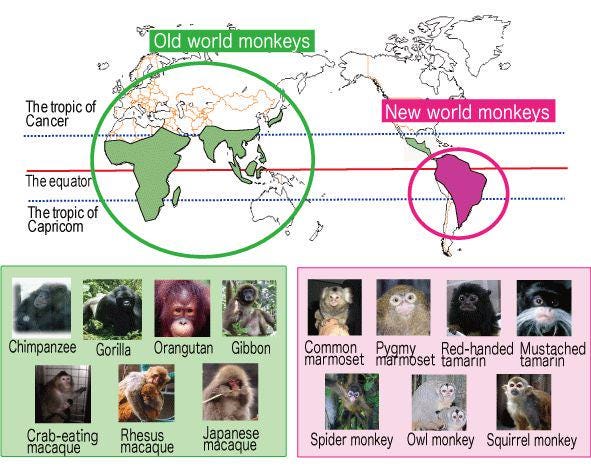
Allopatric speciation is, like many things in evolutionary theory, merely a name for a concept that is deeply intuitive to us all already. When you split a population in two, either by an ocean or a mountain range or something else, you restrict gene flow, and so they start to drift genetically as they adjust to their differing environmental stimuli. When they have evolved to the point where even if reunited, they wouldn’t be able to interbreed, then they are officially two new species. This is the main reason we have so much genetic diversity on Earth.
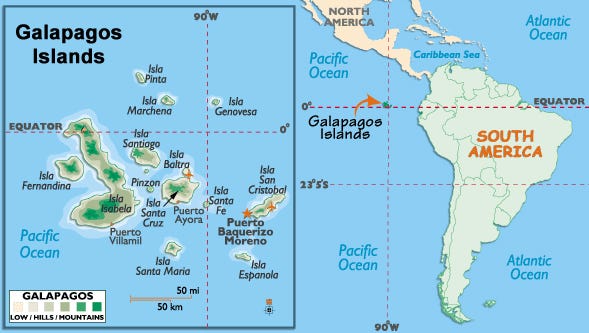
On the walk, I realized you could apply this to cultural evolution, too. (I thank Robin Hanson for his work on cultural drift for getting me in the right headspace to make this realization) A delightful first example came to my mind, from a literal island!
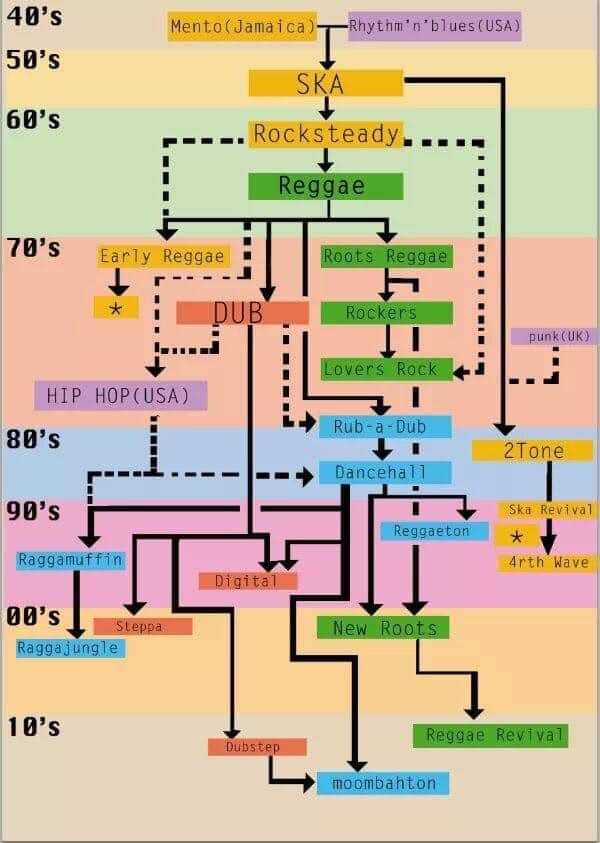
Jamaican slaves descended from a musical culture that, post-migration, they had little or no informational linkage with. What followed was 4 centuries of musical evolution (along with many other cultural elements, like cuisine and norms) that “naturally selected” (culturally selected?) towards a different target than their parent culture. Why? The environmental stimuli were not the same in both West Africa and Jamaica! So, for 400 years they both kept evolving in different directions, and by 2026, they have both created very different music. Thus, the wonderful musical innovation you see above.
But as the thunderstorm approached, I realized something else. Imagine if the meteor that killed the dinosaurs flattened the whole earth, and dried all the oceans up too, and for sake of example, all tectonic activity ceased (so new mountains would never be formed), so in other words, the Earth just became one flat field of grass. This would kill allopatric speciation! In other words, the standardization of environmental stimuli would be terrible for genetic diversity, and 99% of all the wonderful mammalian species that sprang up after the dinosaurs would never exist. I hate to use this word, but wouldn’t that be boring!
You can see where I’m going now. As I look around me, there isn’t much topographical variety left. The oceans have dried up, the mountains have been flattened into hills, and even the hills that do exist today are being continually sanded down in new and inventive ways by the smartest people in the world.
We as a species have tirelessly worked for the whole of human history to increase our interconnectedness, and thus reduce allopatric speciation. (with a few exceptions, such as the Tokugawa shogunate during the Edo period, and Donald Trump today) But humans love trade. Other hominins have nothing on our love of travelling long distances just to barter. Even the shogunate couldn’t resist human connectivity, as they kept allowing Dutch and Chinese trade through Nagasaki, and implicitly enjoyed the past connectivity that brought Japan Buddhism, noodles, and cannons. Similarly, Trump loves Eastern European women.
Even though we’ve been trading with each other for tens of thousands of years, the last 300 have seen an incredible increase in information flow across space, and this has led to an extreme standardization of our environmental stimuli. All over the world, we drive similar cars on similar roads to similar office buildings while listening to similar music on our similar phones and so on. Yes Europeans shop at slightly different grocery stores, but even that, like everything else, is drifting towards universal optimality, otherwise known as Costco.
It’s not just our physical surroundings, but also our informational inputs have become more homogenized across space, a relatively new phenomenon thanks to the printing press, internet, and now AI, to be reductive. I won’t go through the examples again because you get the point. The gap between you and a Korean person, or you and someone just 50 miles away from your home village, 500 years ago, or even 10,000 years ago, is much smaller now.
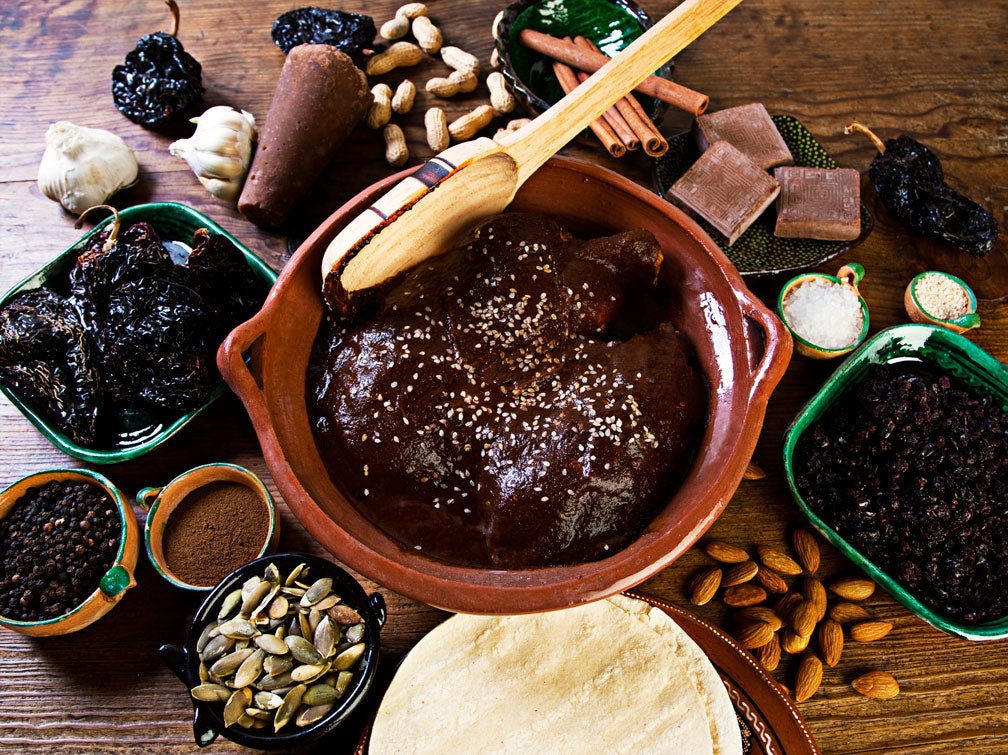
This is annoying. Allopatric speciation is awesome. Genetic allopatric speciation plus clever plant breeding created chili peppers, and thanks to cultural allopatric speciation, the Méxica, isolated from the old world, created a beautiful, unique and inventive cuisine built around chilis. But if Pangea still existed, all humans would have just universally adopted whatever crop scaled the best. We’d likely just see the massive, optimized farming of Eurasian wheat and cattle, instead of the laborious process of cultivating teosinte or tomatoes or many types of beans into their modern versions, without which we would never have Mole poblano…

Of course, more examples, such as Jamaican musical innovations mentioned above, or even just trivially the language of Iceland itself, would not exist, or be much much less unique, if information flows were smoothed over.
With almost everything about our species becoming more standardized, we would expect cultural creativity and inventiveness to decrease, and fundamentally for the world to become less weird. Too bad.
The economist's argument
But competition has increased tremendously, and also scale. This should increase quality, and if creativity is part of quality, then creativity will be incentivized and should increase. Also, increased immigration should be leading to more creative outputs as well. More immigration should inject weird combinations of culture which should result in weirder products, (Tex-Mex or Jewish American media)
And then there’s another part of me that is just wacking myself in the head reading the first part of this essay. Obviously, connectivity is good! Isolation isn’t! For example, recently I learned that the statues of the Buddha you see everywhere only exist because of pockets of Greeks hoplites in India in the wake of Alexander the Great’s invasion. Western India, after the breakup of Alexander’s empire was still Hellenistic; even their first major Buddhist king, Menander I, was of Greek descent. Greeks being Greeks, when Buddhism made contact with their culture, they decided to make statues of The Buddha in human form, as opposed to the only symbolic works of art Buddhists had made of him before.

These statues caught on, and spread all the way across Asia to Japan, and even now to a little outdoor coffee shop in California where I’m writing this!

Examples like this show how connectivity is awesome for artistic innovation. Reggae would have never existed without rhythm and blues on the radio and electric guitars and keyboards being imported, for another example.
Okay, perhaps I can resolve the disagreement this way. Artistic variety goes down whenever information flows increase, that seems obvious to me. Even if you give isolated hunter-gatherers the technology to create oil paint, they might make some really inventive paintings, but overall cultural variety has decreased, since tool use has become more homogenous. The hunter-gatherers have created new art, but are culturally closer to us now. The more we reduce the frictions of information, the closer they will get to us, since a big point of human connectivity, what makes us us, is our ability (and desire) to copy optimal cultural traits.
However, while variety may be decreasing, might quality be rising? What I mean is quality in human outputs such as medicine, engineering, agriculture, and science in general. For art it’s a bit harder because quality means a lot of different things to people, but going by the definition of taste I outlined in my last couple of blog posts, higher connectivity increases scale, so that means more iteration, and so more people with different perspectives can relisten over generations to, for example, classical musicians, and thus can confirm or modify the status of a composer or work, and determine quality. Also, having more groups of humans increases the frequency of debate over axioms/assumptions, quickening the rinsing out of ‘‘bad’’ assumptions. I would recommend reading the blog post below to get a better idea of how I conceptualize artistic quality.
Are Markets for Art Criticism Efficient?

I’ve recently become really interested in what makes an intellectual tradition feel subjective or objective, or some shade in between.
In short, increasing the amount of people in a market will make it more efficient.
For a simpler argument, it would be quite strange if connectivity improved our ability to create everything else besides art, so it seems likely art gets better with connectivity as well. You would assume, for example, that cooking would improve with better tools, similarly with architecture and painting too. Better tools simply allow the artist to better execute the vision in their mind, so connectivity hardly seems to make things worse.
But here’s a problem: In my posts on art, and generally the last few months, I’ve been thinking about markets from the point of view of the buyers. But what if I thought about it from the seller’s point of view?
Stay with me here. What happens to financial markets when they become perfectly efficient: Active trading (exploring for weird stocks) stops being profitable. Everyone just buys the Index Fund (an average aggregate of the whole market).
What happens when a market for art production becomes perfectly efficient? In other words, when do producers know exactly what consumers want? The more perfect information an artist has, the less they explore, and the more they just execute the optimal formula. Marvel Phase 3 is a flawlessly optimized Cinematic Index Fund. (Of course this requires an implicit assumption that consumer demand affects artists’ outputs, however, that assumption is trivially true.) (as another aside, many artists, some of which I know personally or some I’ve just heard written about, seem to purposefully avoid high artistic connectivity for a fear of the accidental imitation/homogenizing of their own music, which is evidence for this point.)
If you’d like (and I do like), we can include originality or weirdness or inventiveness in art quality, which is why someone could write just as well as Shakespeare today but not be as great, because there is a first-mover effect on quality. If we include this, then contra what I was writing earlier, it seems quality decreases with connectivity!
But what about Jazz and Birria tacos! C’mon, there’s got to be more to this. Connectivity seems so good for art, at a certain margin at least.
That’s it! The answer to this tension, presented by Tyler Cowen: marginal thinking.
So we have two variables, quality and weirdness/variety, which both change in opposite ways when information flow/standardization of environmental stimuli increase. The solution? Solve for the equilibrium!
And that is: New Orleans, circa 1890.
I will nickname this equilibrium of variety and quality, an artistic margin. Before I explain what an artistic margin is, let’s discuss Black American macro-genre musical inventiveness in the last 150 years.
Intermission
We have seen a fall in Black American musical genre invention in the last 50 years.
And why is this, you might skeptically ask? (To really seal the horse in the coffin at this point) because of a standardization of environmental stimuli, of course! What makes this such a good example is that, like all Americans, Black Americans in the last 50 years became more globally homogenous thanks to the internet, greater ease of travel, trade, and so forth, but also because of the special element of structural racism. In other words, Black Americans have uniquely and more intensely standardized in the last 100 years because they were coming down from a much higher point of allopatric speciation than the rest of America in the 20th century.
Due to racism, Black Americans had their own institutions like churches, clubs, radio labels, and so forth. They were quite distant from the mainstream of America. However, they were an interesting case of allopatric speciation, because unlike the finches of the Galapagos or the humans who crossed the Bering Strait, Black Americans still had a relatively high information flow with the rest of the world, especially the rest of the cultures within the United States and to a lesser extent places like Mexico and the Caribbean. They could still get access to innovations happening in other “islands”. If you’re interested, I recommend reading this blog post for a fun example of that information flow producing great art:

Of course, one could look at the Chicago electric blues scene making use of new electric guitars, or the genre of ragtime being invented thanks in part to European pianos and sheet music. But the best example is of course the greatest American art invention of all time, jazz. And jazz is really such an exemplary melting pot of connectivity. We’ve got past Black American genres like blues, ragtime, gospel, and overall West African music theory, (you can thank it for the focus on rhythm) then European instruments, harmonies, brass bands and military/parade music, and European music theory, (more of a focus on melody, which jazz also has in spades) then Caribbean and Afro-Cuban rhythms, and finally the dance halls and musical entertainment industry in New Orleans helped shape the performance style. I don’t care what anyone says about hunter-gatherer cave paintings in France, ancient Egyptian food, or native Pacific Northwest architecture. Jazz beats all, and it’s thanks to the greater connectivity of New Orleans compared to those other places, but specifically, New Orleans being an artistic margin, and them not.
You can now guess what I mean by that. An artistic margin is an edge of a larger system that is separated enough to develop its own cultural inventions, but connected enough to recombine outside influences. Total isolation leads to stagnation; total integration leads to homogenization; but the pressured edge creates hyper-innovation. The Black American art margin in the 20th century was extraordinarily inventive because of segregation, the informational constraints facing all North Americans at the time, the path dependence of West African norms around music, the opportunity cost being lower for ambitious creatives to go into music than other ventures (because of segregation). And for completeness sake of the model, there were also scale effects. There was a huge internal market for Black Americans, much bigger than say Black people in the UK in the 20th century. To make another analogy to biology, the margin cannot be too small because genetic diversity will be too low (inbreeding). The larger the margin, the more opportunity for genetic diversity. Thus, Jamaica is also a margin, but smaller, and so has less musical variety than Black Americans in the United States.
Because Black Americans inhabited such a unique and large art margin in the 20th century, we saw perhaps the most musical creativity of all time. Genre after genre was invented, sometimes multiple within a single decade.
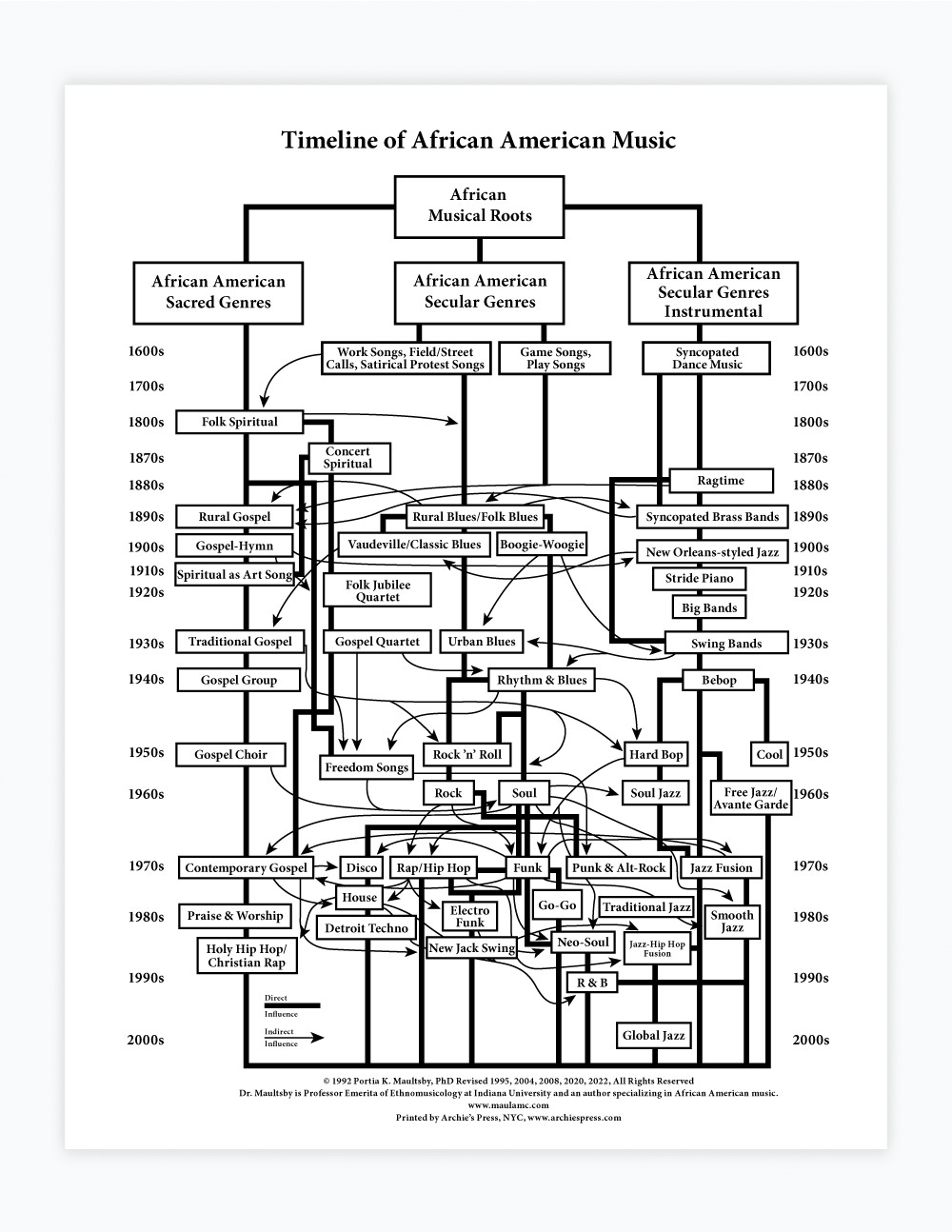
To invent rock, soul, revolutionize the genre of jazz with bebop, and then invent hip hop, funk, and disco, all within 3 decades, is a ridiculously spectacular creative run, one that I doubt will ever be anywhere near matched by any group in any field of artistic human achievement. The chart above does almost nothing to really put it into perspective. One could listen for a lifetime to just one of these genres. Jesus Christ! One could listen for a lifetime to just James Brown….
But this gives you a taste of how important an art margin can be for hitting that perfect equilibrium of information flow without becoming overly homogenous.
Unfortunately, as I said at the beginning of this detour, Black American macro-genre innovation has decreased substantially. No, this does not mean innovation isn’t occurring, but to say that it is occurring at the same clip as the mid 20th century, especially macro-genre invention, is, I think, foolish. Black American music is still high quality, I’m just arguing it’s inventiveness has gone down. My preferred explanation is that, like all over the world, allopatric speciation has been relatively extinguished. Since the flow of culture (genes) is less inhibited, there are not “new” populations to add culture flow (gene flow) to to create novel combinations. There are no new populations. It’s really just one population now. The Mississippi Delta used to be an island. NYC was an island, LA, NO, etc. All that is gone now, and so macro-genre invention has been depressed.
The Mormon Argument
Mormons are a margin with a large population, yet seem in the 20th to be quite uninventive? My answer to this would be that cultural evolution fundamentally relies on mutation coming from purposeful deviation and mistakes. In jazz or early hip-hop, rule-breaking was the opposite of punished; it was often rewarded. But Mormons strongly selected against cultural deviation in the 20th century to build a unified, high-trust, safe community. Why this is would take a post of it’s own, but of course, this objection reveals that I am not saying the margin theory predicts all artistic variance, just that it predicts a lot! But you need more variables, like cultural cautiousness, perhaps. I will also say, the Mormons were less of a margin, since they didn’t face nearly as much segregation.
So, to wrap up, I believe that variety and connectiveness are negatively related, but quality and connectiveness are positively related, up to a point (the art margin) and then past that point, quality actually begins to decrease. You can see this play out with Black American genre invention, but for a less dramatic example, you can also see this with cinema. As the market became more efficient (thanks to repeated iteration and a clear target of profitability to optimize towards) and information environments became standardized, cinema companies moved towards marvalization, and film creators became less inventive. In other words, cinema companies started taking less risks, and made fewer mistakes than they used to, and film became less weird because everyone was consuming the same stuff, relative to the past. It has made movie marketing more formulaic, and in the process, made consumers happier, but reduced quality (since we agree that inventiveness/creativity should be part of quality). You can also see this in the NBA. Over time, the market for NBA strategy became more efficient, and thus, more formulaic. Most prefer a high-scoring league, some don’t. Personally, I don’t know if the shift towards the standardization of offensive strategies has made it worse or better, we may not be at equilibrium yet. But the farther we travel up the curve the higher the chance things will start to get too predictable in the NBA for me.
Academia has also followed this trend. I remember in a recent podcast with Robin Hanson and Bryan Caplan, Robin remarking how unfortunate it is that academia has devalued creativity and risk-taking relative to the early 20th century. I think my theory explains why. Global citations, strict publishing rubrics, and the universalizing of English as the language of science means, for example, you can now quickly combine an idea from Tokyo with a data set from Berkeley, or in other words, science has become more high-quality thanks to connectivity, but the standardization of the domain has led to a decrease in eccentric weirdos creating whole new ideas in somewhat isolation. This doesn’t perfectly explain the change in norms around how much we value creativity in academia, (not nearly enough!) but it does explain why it isn’t as creative as it used to be. The universities of the world have all optimized towards becoming one global monoculture.
I know a lot of people will disagree with this threshold point for quality of art. They might be with me for most of the article, but they might negate the premise and say no cinema is as creative as ever, Black American macro-genre creation is as creative as ever, or they might say fine, they’re less inventive, but degree of connection is just a small factor among many, or something else I can’t think of.
This is a conceptual argument which I use illustrative examples for, and if you have specific problems with those examples, then comment and we can debate it, although I would think they would be intuitive. I’m not saying it explains all the variance of art quality, but simply that connectivity creates a pressure toward standardization, and this pressure helps explain why many domains (not just art, but also art) have become more optimized and formulaic over time.
This is probably a bit confusing, so to illustrate what I’m talking about here, I made this graph while I was writing this post in the cafe.

Yeah it’s pretty trash, so I thought about just having Claude make me one, but I decided why not make it myself with my dad’s painting supplies. AI is a standardizing technology anyways, so why not try to make the world a little weirder.
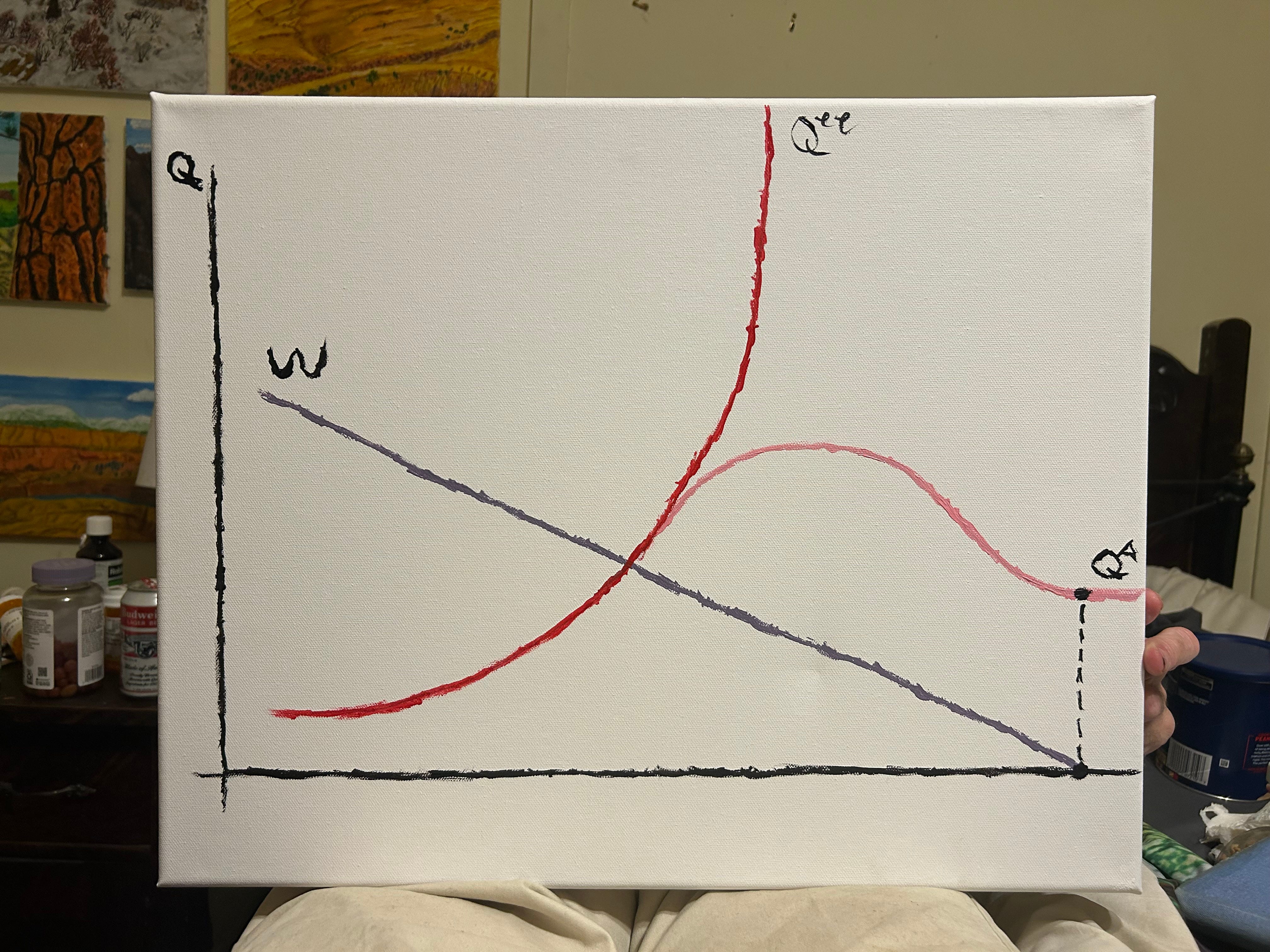
So the axes are quantity for the y, and I forgot to write a C for connectivity for the x axis. The W stands for weirdness or variety, and the red curve is the quality of everything, except for when art splits off it in pink, after which red becomes every human endeavour besides art (the double e stands for: Quality of everything else), and the pink is just the quality of art for the world. As I wrote above, you can see that after a threshold point of connectiveness, quality for everything else, like science and engineering, keeps increasing, but art diverges and begins to decrease in quality. You don’t want novelty and surprise for surgical equipment, for the most part, thus the deviation. New Orleans in the late 19th century, early 20th, would be around that maximum point on the pink curve.
On the right, you can see that once the weirdness line hits zero (everyone is exactly alike and operating optimally), then art hits a lower bound (point on the dotted line) since technique is still high. That flat line is simply the quality of art minus any originality or inventiveness, in a completely connected world. So all we have are perfect Hendrix, Monet, and Chekhov imitators.
On the top left, you could imagine we have a world of hunter-gatherers in complete isolation who are inventive but stagnant across time, and lack the tools to create higher quality outputs like jazz or impressionism. This will be the most weird and inventive for the world, however, since each is completely unique from each other. No world could be more diverse than this one.
Honestly this is quite a simple graph, and it’s pretty easy to poke holes in it. (don’t be so violent though, the canvas was expensive) For example, the art margin is a kind of complicated idea that doesn’t fit well into this simple graph. The art margin seems to have about 5 main variables, being the thickness of the margin, (how high the information barriers are) how open and risk-tolerant the receiving culture is to new cultures, how productive the margin’s neighbors are in terms of copyable cultural inventions, how large the internal market is, and, like the infant industry argument for government sponsored firms, the margin needs a period of relative seclusion where the art form can grow into it’s potential before becoming paratized and monotized by the larger culture.
I know all this seems like a black pill for art in the future, because it’s obvious that connectivity will only increase. However, I present:
The creativity of MAGA argument
In biology, there is a second, much rarer way for new species to be created, which is called sympatric speciation. This occurs when a new species evolves from a single ancestral species while inhabiting the exact same geographic region, and I think it is becoming our main new vehicle for generating novelty.
By classifying all legacy media (CNN, the NYT, academia, Hollywood…) as either evil or bought out, and rampantly conspiring about satanic pedophile rings and pizzagate, the MAGA culture movement was able to successfully alienate itself from the standardized information environment, all while occupying the same geographical spaces as us. This was all orchestrated of course using the internet, specifically on “islands” like QAnon and 4chan.
And now you have it! We’ve got finches on the Galapagos again. These people have voluntarily cut themselves off from the mainstream information environment, and they’ve got radically different norms. (selection pressures) Cultural drift begins. And you can’t argue MAGA hasn’t been inventive.
Here’s a glossary of various slang and invented terms that people in the QAnon movement use. Apparently in Q-lore, North Korea was controlled by the CIA but has now been liberated by Trump and the Q team. Below we have an example of a post from a more famous anon called Victory of the Light, a predecessor and influence on the famous Q, detailing what will occur after “The Event”.

A now famous user named Q took this culture and rode with it, writing what is basically a new 21st century art form, kind of like a serialized novel through short posts, memes, and youtube videos, and also, the novel itself is built in real time with the community. A lot of people seem to believe it’s actually not a novel, and is true, and some who just read it for pleasure. Its core plot is described well by this article.
With the aid of a small group of military intelligence officers called the Q team (one or more of whom is supposedly responsible for writing the drops), President Donald Trump is waging a shadow war against a cabal of Satan-worshipping, child-eating pedophiles who are conspiring to obstruct and overthrow him. The military will arrest them en masse in an event called “the Storm.” The cabal’s membership has grown in the telling (at first, it was “many in our government;” within a month, any “celebs” who had “supported HRC” might very well be in on it; a few months later, there were too many to fit into Guantanamo Bay; later still, three other “detention centers [were] being prepped”), but it would be fair to say that virtually anyone who’s angered or defied President Trump is considered part of the cabal, along with the usual suspects like financier and philanthropist George Soros.
There are also many actual serialized novels that have been written over time within the movement, some of which describe a world where Donald Trump actually won the election, but through a series of events I don’t really get, “allowed” Biden to be a puppet, even while staying in charge of the military, commanding the intelligence apparatus, and apparently all the while waiting to reveal the truth.
So I know this seems bad, but on the other hand, we have the rationalist community!
Lots of not only inventive but really spectacular works of human genius have flowered from this island, including the somewhat founding canon of The Sequences, then, a list of it’s own much superior (to MAGA) slang and phrases, some of which I love and use daily, Eliezer’s famously weird Harry Potter rationalist fanfiction, this other work of interesting fiction that has seemingly turned into a roleplay universe, and also this piece of visual and storytelling art about AI existential risk, which I find cute. I also really enjoy their cultural norms, especially how highly they prize AI, AI safety, prediction markets, and probability theory.
We can keep going, but the point is that the internet is both a standardizing and sympatric technology, and so there is a bit of hope for humanity’s creativity. It’s good on net that groups which would have speciated can now do so because of the internet. MAGA has, of course, been an overall toxic force in the world, but I only use that example because 1) it proves dramatically that the internet is a sympatric technology, and 2) the movement is both interesting and occasionally funny anthropologically.
Unfortunately, the internet seems to be mostly an anti-allopatric technology, and it seems AI is most likely a homogenizing technology as well, and it’s an easy bet that people will become wealthier with time, and travel will become more accessible with each decade. Roon on this point:
renaissance rationalization is a process that commodified itself rapidly: despite the europeans discovering most technology during the early modern period it spread everywhere within a few centuries, and the rate of spread has been increasing dramatically
knowledge of the scientific frontier dissipates around the world faster as science has enabled better communication technologies. it’s getting even faster with INTELLIGENCE technologies which actually explain themselves and help you build them
as we approach more powerful intelligence, the ability to train powerful models is self commodifying rather than building a huge and runaway advantage for a handful of recursive self improvers. this is one reason why you should expect almost all of the benefits of superintelligence to be captured by the public
Generally, I’m confident that we will keep on our 100,000 year trend of greater interconnection, which for science is all well and good, but for or art? Colour me skeptical. Actually, just prove me wrong in the comments! I’m uncomfortably pessimistic that the world will become less weird. Wake me back up to my natural state of optimism, please.
Yo fairly valid article, what’s ur favourite monkey, existing or extinct, or best hominid. Sometimes when I read this blog I feel like Brian Griffin. Good stuff 👍